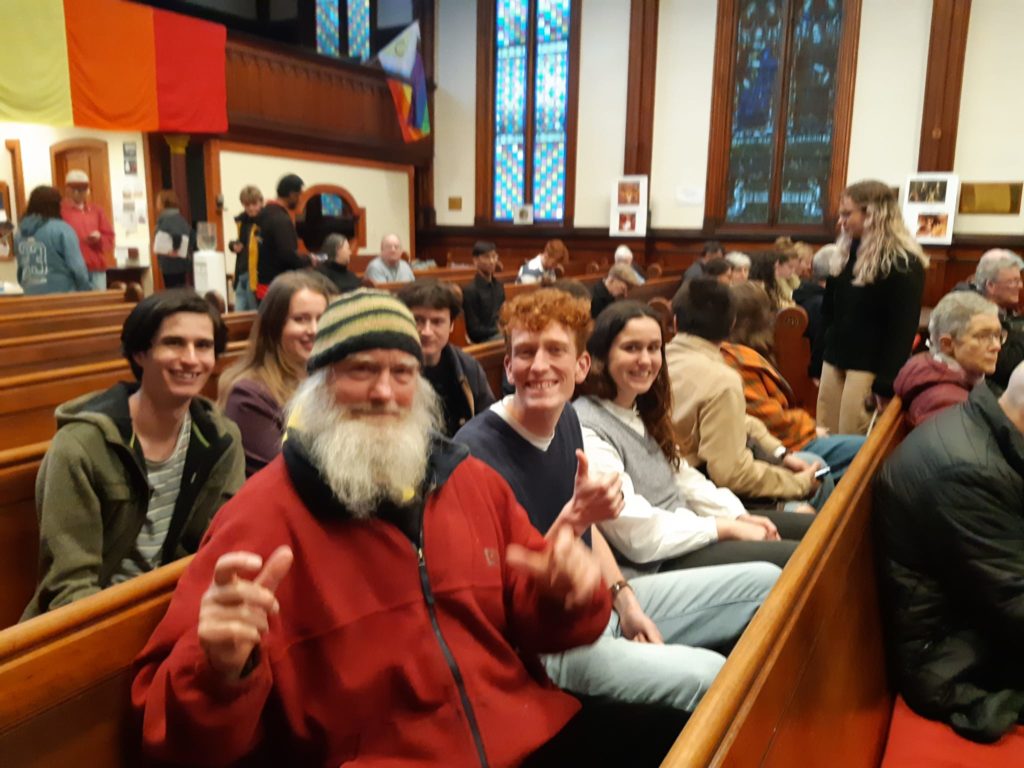
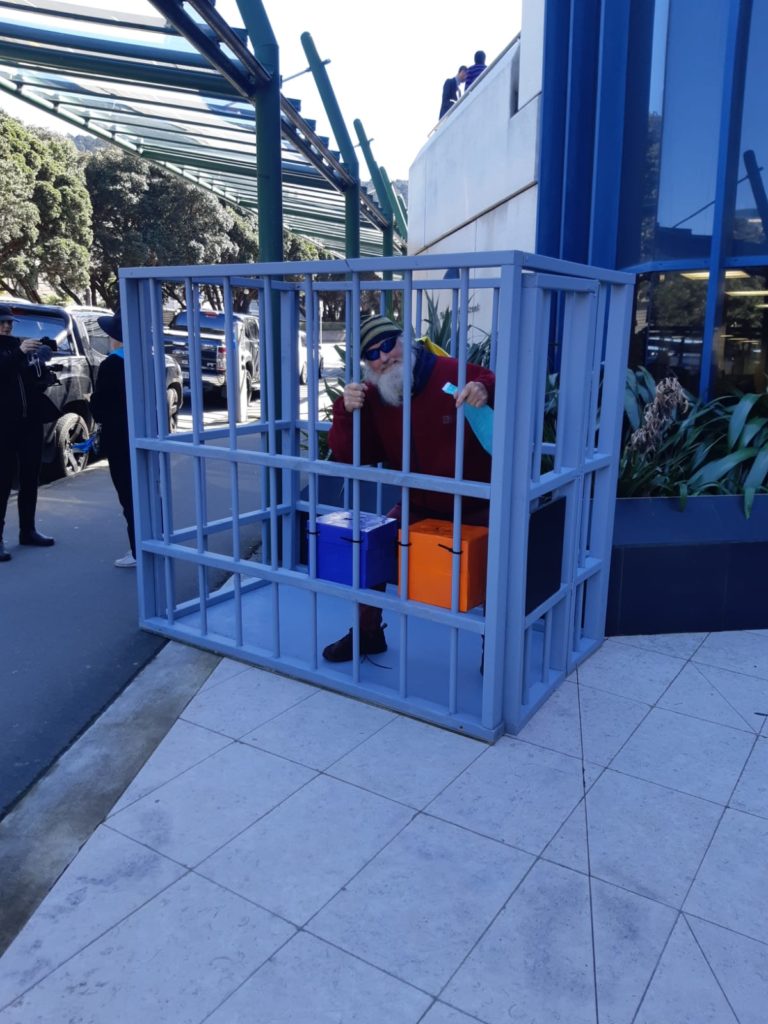
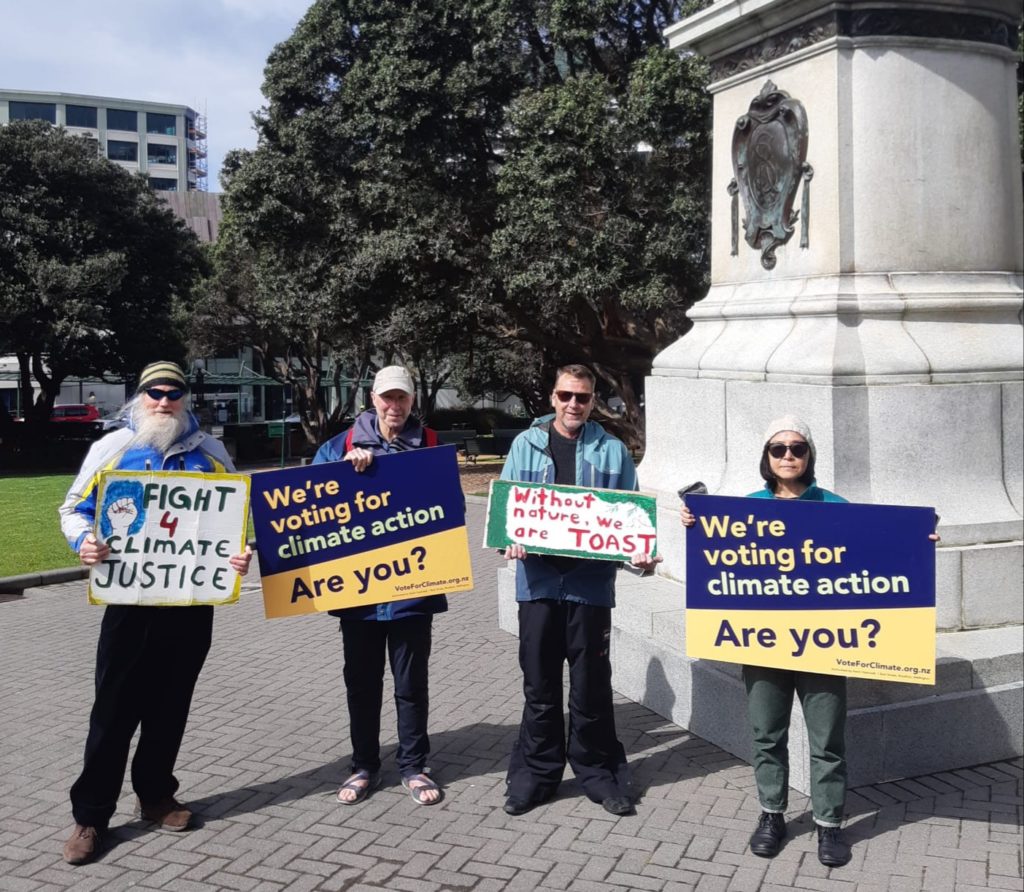
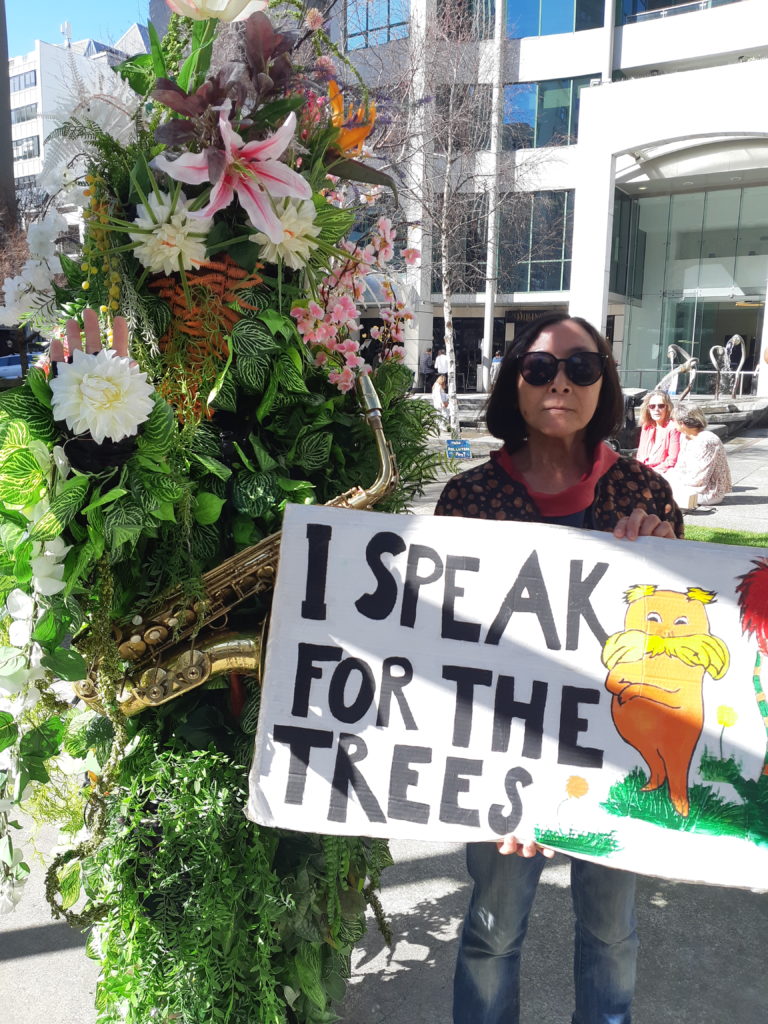
A couple of photos

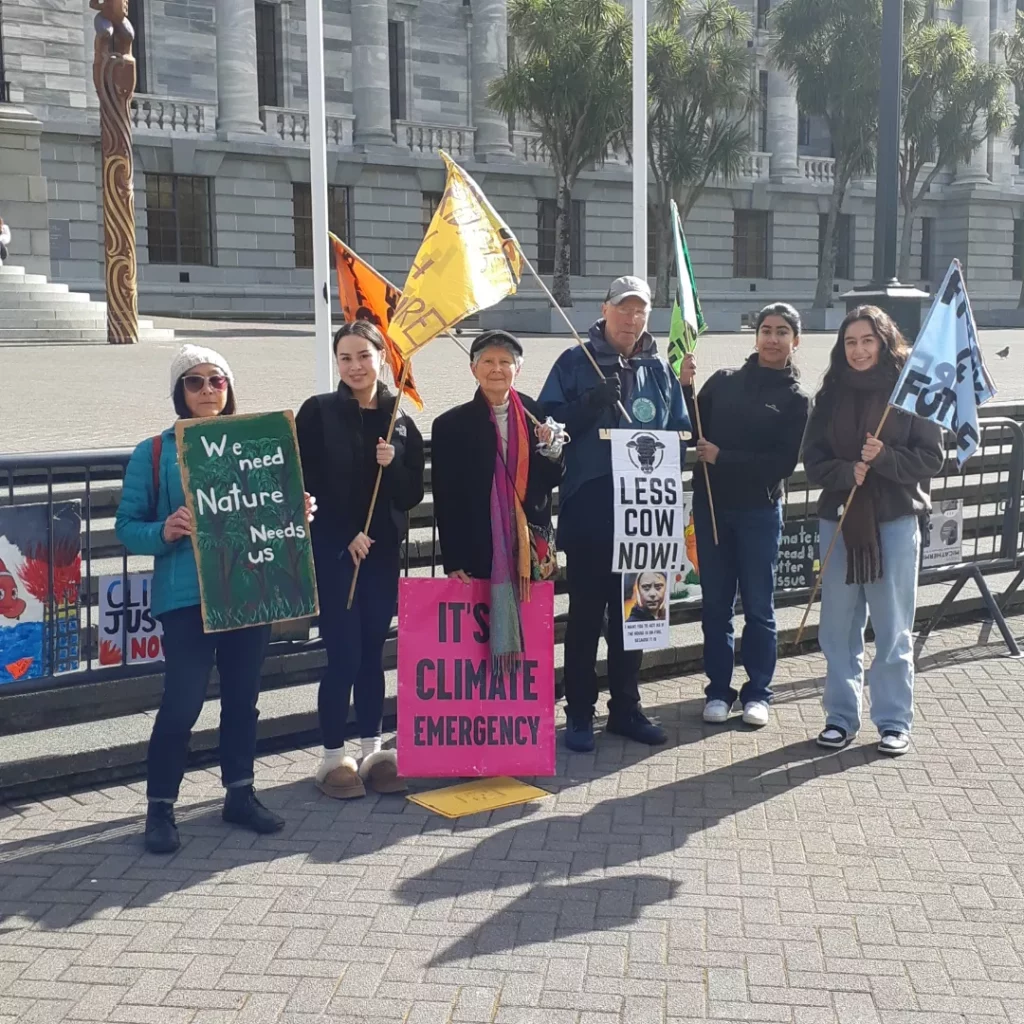
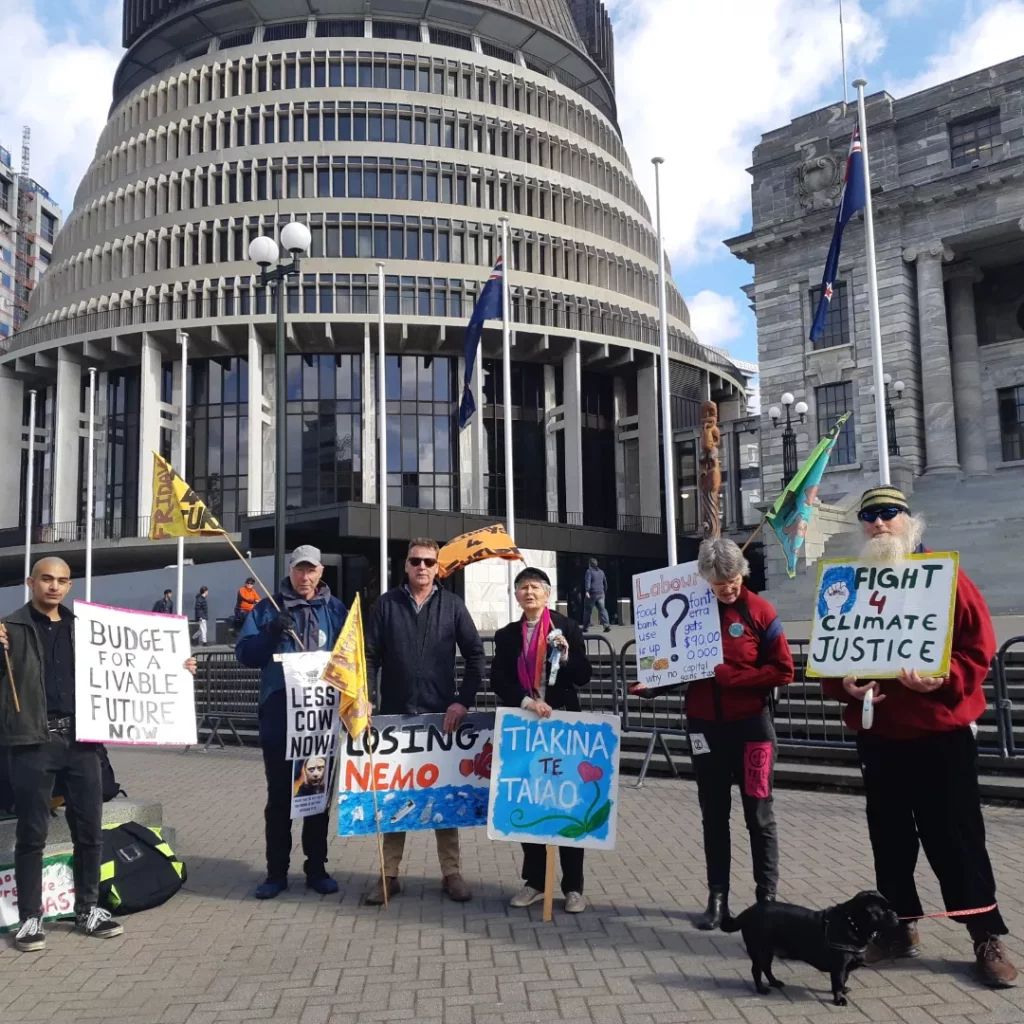
It was lovely to see some young people join us at our Parliament protest last Friday.

Joined here by students from Tawa College

Welcome back Henry the climate action dog! And Alexander too.

Friday 25th we will be at Midland Park for our fortnightly protest against Fonterra – see you there!

Be the voice for the climate at in-person election campaign meetings

In the latest Climate Club e-newsletter there’s a link to some great advice on how to make sure climate is talking about at election campaign meetings.

These are where candidates meet the public (that’s you!), talk about their plans for the election, and answer questions from anyone in the audience.

This is where we come in. As members of the voting public, it’s important that politicians know there are lots of people out there who are keen to vote for strong climate action.

Find out the most effective ways to ask candidates about climate.

Or you can just turn up with an appropriate placard!

You can also subscribe to the Climate Club on the same link – it’s well worth it.

Vote for Climate

This election we have a huge opportunity to make a difference to climate action policies in New Zealand.

Vote for Climate is here to show you how to most effectively vote for climate action and how to join the campaign to make climate change prominent in this year’s election campaign.

Would you be willing to:

  • Put a sign on your fence
  • Wave signs on the side of a busy road with a group
  • Run a stall with a group
  • Stick up posters around town
  • Join a rally and/or
  • Help with social media (including liking & commenting to boost posts)?

Find out how to get involved in the Vote for Climate campaign.

See which political parties have good, no, or poor, climate policies.

The Big New Zealand Climate Action Survey

If you live in New Zealand, are aged 16 years or over, and you take any kind of climate action, this survey is for you. (For example, you make lifestyle changes, attend or organise protests, sign petitions, consider climate change when voting or making major life decisions, talk to people about climate change, take a stand on social and economic justice issues that might help reduce emissions…).

It should take 15-20 minutes to complete, and the survey answers will be used in a PhD dissertation by a Victoria University doctoral candidate.

The more people who complete the survey, the more useful the findings will be for supporting climate action in Aotearoa.

At the end of the survey you have the option of leaving your contact details to go into the draw for a $20 supermarket voucher – of you can forgo the draw and be completely anonymous.

You can also choose to participate in a focus group, these will take place in late 2023/early 2024.

Visit the survey website to learn more about it.

Click here to start the survey.

Ranking personal climate actions

What are the most effectives actions that you as an individual can take, to reduce climate emissions? If you’re talking to someone about climate collapse, they might want to know what they can do about it.

Recycling is great, but doesn’t reduce carbon emissions

It seems to depend on who you ask, but all the credible sources I found (via a quick Google) say that recycling is pretty low down the list – no surprises there.

Lists of most effective individual actions vary, but there’s a lot of overlap

An article in Newsroom’s futureproof e-newsletter tries to answer this (read it on Substack):

  • Number 1 – according one study – is leaving your car at home at the top of the list.
  • Or, it’s having one less child (according to another study).
  • Number 7 is moving to a plant-based (ie, vegan) diet.

A recent study concludes that vegan diets result in 75% less climate-heating emissions, water pollution and land use than diets in which more than 100g of meat a day was eaten. Read about the study in this Guardian article.

An article by the Imperial College of London comprehensively lists the top 9 climate actions as:

  1. lobbying central and local government
  2. eating less meat and dairy
  3. reduce flying
  4. leaving the car at home
  5. reducing energy use (this might be more relevant in the UK than here in NZ – what do you think?)
  6. respecting and protecting green spaces
  7. banking and investing your money responsibly
  8. reducing consumption and waste
  9. talking about the changes you make

Read the article here.

Top ten climate actions for central government

So, if the most effective way to reduce climate emissions to to lobby central and local government to effect wide-ranging changes, what should we ask government to do?

The Climate Shift coalition, which Fridays for Future Te Upoko o Te Ika and around 40 other environment groups have joined, have a list of ten actions aimed at all political parties coming up to the 2023 general election.

I’ve summarised them here:

  1. End new oil, gas and coal exploration and extraction
  2. Transition to public and locally-owned, nature-friendly, renewable electricity
  3. Transition intensive dairying to low emissions farming
  4. Ensure our laws reflect the urgency required to address the climate crisis
  5. Protect communities by making room for rivers to flood safely and enabling a managed retreat
  6.  Renewing and scaling up our climate finance commitments to our Pacific neighbours
  7. Maximise native forests’ role in absorbing carbon and in protecting communities from flooding and erosion
  8. Maximise native forests’ role in absorbing carbon and in protecting communities from flooding and erosion
  9. Protect the role wetlands and estuaries

Read the full list of demands on the climateshift.org.nz website.

Fridays for Future Te Upoko o Te Ika on Access Radio

Fossil fuels have put us in the 6th mass extinction. Governments are not facing up to the urgency for Action. Hear what climate crisis groups in Aotearoa are doing!

Climate Crisis Action Aotearoa is a 4-weekly, 30-minute radio programme on Access Radio (106.1FM). It features members of our group, and guests, talking about the climate crisis and what needs to be done.

Tune in on the following Sundays at 6.30pm:

  • Sunday 9 July
  • Sunday6 August
  • Sunday 10 September
  • Sunday 8 October
  • Sunday 5 November
  • Sunday 3 December